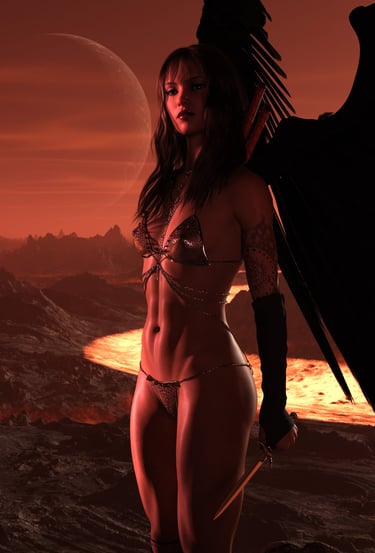
Princess Aureilia - The Dark Angel
By Michaela
I was born to wind and ruin.
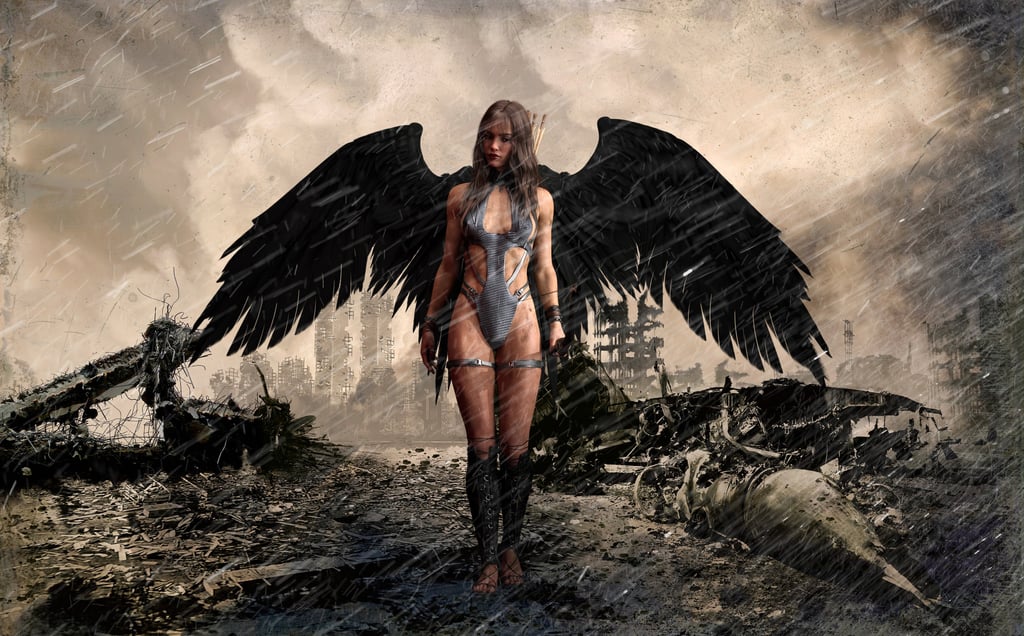
On clear days you can see the bones of the old world from our cliffs—towers picked clean, a fuselage half-buried in grit, metal twisted into prayers the old gods never answered. I learned to balance there, toes on hot stone, wings tasting the thermals that rise off the broken city. The rain comes sideways in this place, and when it does I spread my wings and let the water drum through the feathers until the noise of it drives every other thought away. That’s when I remember what the elders say: the world ended; we did not.
We live between three belts that cut the planet like scars. To the south, the Furnace breathes—lava lakes and black glass plains that hold the sun like a blade. To the north is the Pale Kingdom, where the sky sings with green fire and the air freezes in your nose. Between those extremes, in the Borderlands, my people make homes in towers on a lagoon left by those who broke the world. We read wind like text, and we keep watch because the land is loud with teeth.
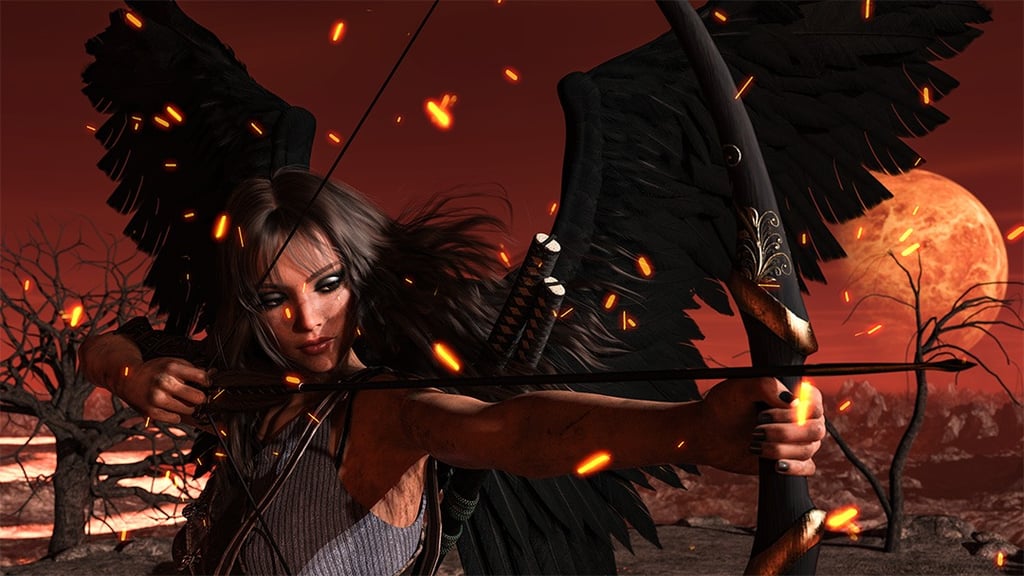
I was three when they put a bow in my hands. It was barely more than a curved twig, but it taught me the first truths: breathe, align, release. The bow was my first weapon and I used it every day, by five I was good, by ten I was flying training circuits firing at moving targets and I never missed. My mother strung a cord between two pillars and told me to thread the same breath of air ten times. I did. She didn’t smile—she only nodded, once, like a tally scratched on stone.
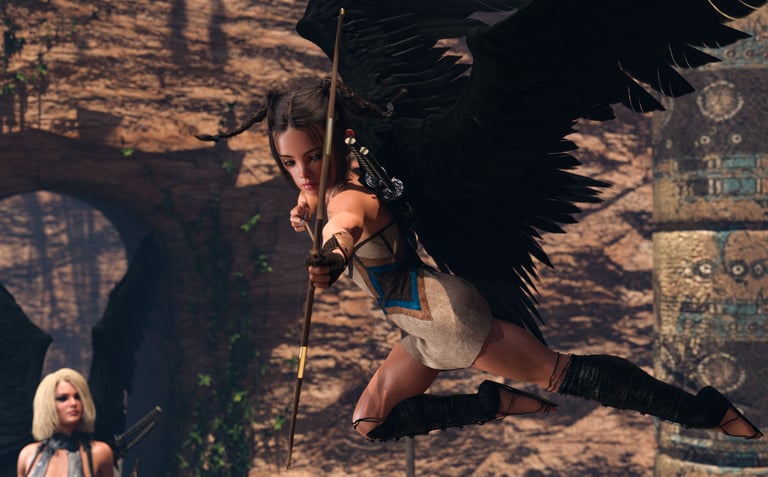
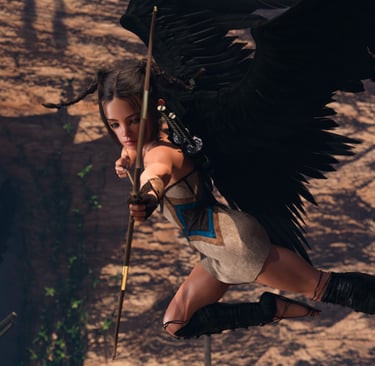
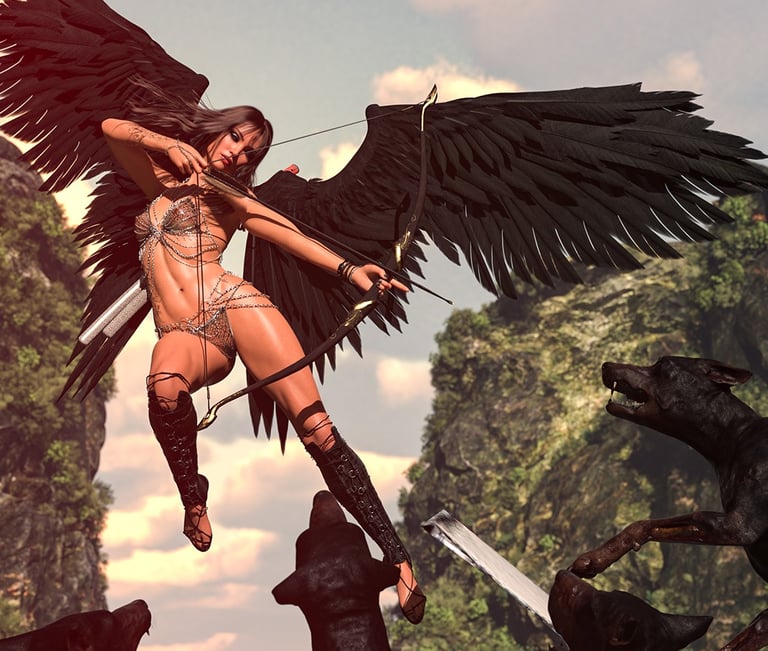
By ten the bow felt less like a tool and more like a way of thinking. In the years to come the Borderlands sharpened it. Packs of rabid dogs would pour out of shade and stone like water turned to knives, foaming and fearless, the sickness eating the fear right out of them. I learned to move where the pack could not look, to use my wings as a wall for those behind me, to take the high cut of a thermal and drop through the centre of a circle of teeth. People talk about bravery when they see those fights. It isn’t bravery. It’s arithmetic. You count breaths. You count distances. You count who still needs you when the noise stops.
At fifteen they put me in the arena.
Four trained men, older, heavier, their blades catching the sun like they meant to blind me. The pillars are carved with a language no one reads anymore; when I breathe there I can almost hear it.

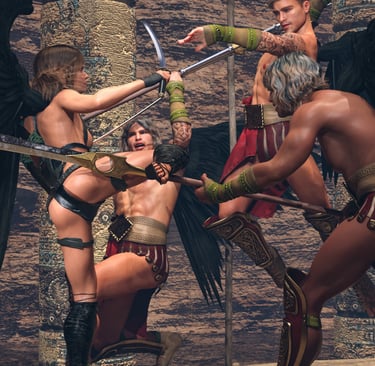
The horn sounded. I stepped left before their eyes could agree on me, turned a thrust into a hinge, and let the world slow. When I am inside a fight the seconds thicken. It isn’t magic—nothing that grand. It’s the way the mind clears when you give it only one rule: make the next thing right. I finished it with three cuts and a kick that set one man on his back hard enough to knock the wind out of him. The fourth never reached me. They call that day training. I call it a promise to the people who would one day stand behind me.
A victory is unfinished if you leave pain where you found it. When the dust settled, I knelt and drew the magic into my palms until the ache in their ribs loosened and the cuts on their bodies healed. Warmth-weaving is quiet work. You listen to the body the way you listen to weather. One of the men opened his eyes with surprise and a little shame, like he’d expected gloating. I pressed his hand shut on the hilt of his sword and told him to breathe. We are not playing at enemies here. We are practicing for the ones who do not stop.
The real enemies live where the map glows.
To the south the Furnace roars, and with it the crimson dragons—apex hunters with minds like whetted iron and a hatred for the scent of our sigils. They sense the current of a pulse across distance; they taste the ghost of heat we carry under our flight leathers. When I fly the edge of their territory, I choose the ground first: a ridgeline with a clean wind, a river of fire behind me so their eyes must fight the glare. I stand there sometimes with a sword loose at my side and measure the land the way a carver measures stone. You don’t defeat the Furnace. You borrow from it—light, heat, a horizon bright enough to hide a strike. When the dragons lift, I go into the sun and become its argument.
The north is a different language.
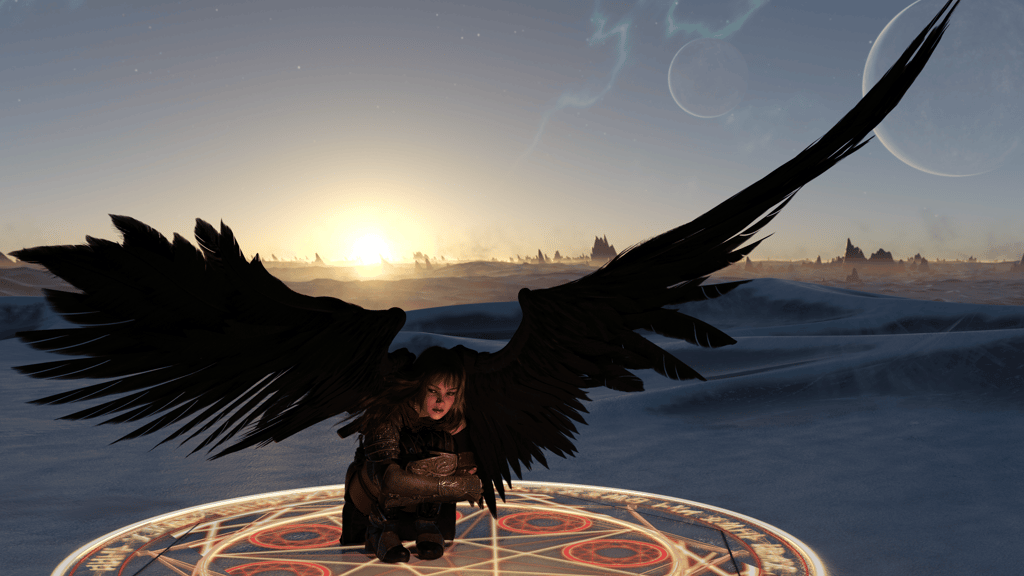
The first time I crossed into the Pale Kingdom, dawn made the ice ring like glass. I drew a circle of sigils on the snow and knelt inside, letting the heat hum low against my skin while my breath stitched the air white. They came as shadows first—long, deliberate, older than our ruins. The ice dragons do nothing quickly. They watch. They weigh. When the matriarch finally put her horn to the feather I had inscribed, the sound of it traveled through my ribs. Our pact is simple: we do not hunt near their rookeries; they warn us when the crimson broods begin their hungry migrations. It is not friendship. It is respect, which is the truer thing.
Between north and south, life continues in the Borderlands. We farm what will grow on ledges and in terraces carved by hands that remember better tools. We set wind traps for water and salvage the bones of the old cities. We teach our children arithmetic and weapons in the same lesson. The mutants come down out of rusted stairwells to trade or to take, depending on the season. Orc-blood warbands test our perimeters. Sometimes I meet their chiefs on the broken highways and count the lies in their eyes. Sometimes I do not bother counting.
People call me many names—princess, commander, Dark Angel. The truth is plainer: I am the first up when the horn sounds and the last to leave a field where our blood cooled. I carry maps in my head: the thermals that will lift a body even when it is too tired to believe, the crevasses that will take a careless foot, the safe downdrafts where a caravan can tuck itself away from a storm of teeth. I carry oaths in my pocket, each one a feather etched with a promise kept.
If you walk the cliff road at night you’ll hear the wind organs we built from old satellite ribs singing to the magnetosphere. They don’t make a pretty sound, but they remind us that this planet is still awake. Sometimes I hold watch alone and feel the whole map inside me at once—the Furnace pulsing, the Borderlands breathing, the North listening. On those nights I think of the first time I stood in the rain among the wrecks and skeletons of old buildings with my wings open and realised the memory of the world is long, but our duty is longer.
This is where I live. This is what we hold.
When the packs howl, I count breaths and draw. When the dragons wheel, I choose the sun. When our people fall, I put heat back into them and wait for the moment their eyes clear. And when the horizon goes quiet, I do not mistake it for peace. Quiet is the space where we sharpen. Quiet is the place where we remember who we are.
I am Aureilia, The Dark Angel. The world ended, yes. We did not. And as long as these feathers can find a current and these hands can loose an arrow, the horizon is ours to keep.