Becoming
By Michaela
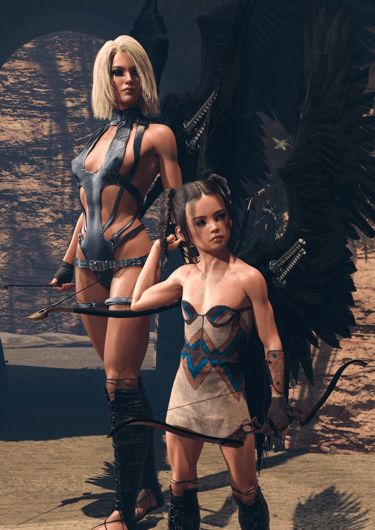
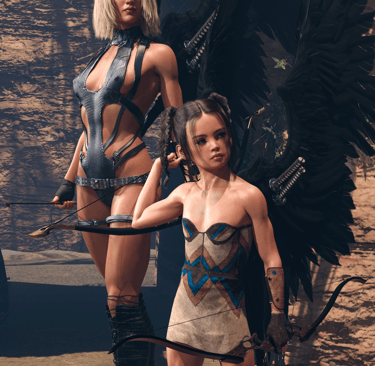
At ten my bow was taller than my pride.
I learned to draw in the shadow of the pillar maze where the wind runs clean between stone. My mentor — cool -eyed, patient — stood behind my shoulder and said the same three words until they lived in my bones: breathe, align, release. The string bit. My fingers bled. I counted arrows and breaths the way other children counted songs. When the first shaft found center, the world didn’t change; it simply agreed that I belonged here.
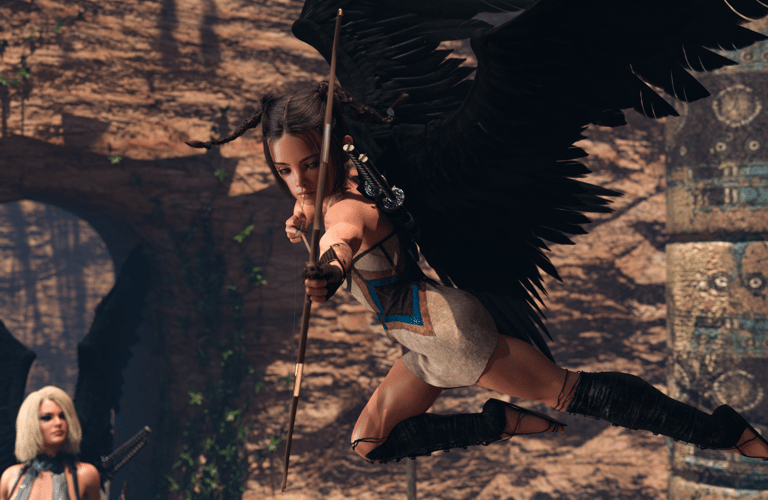
They taught me to fly without leaving the ground —how to let my wings anchor my hips, how to feel the crosswind in the smallest feather and correct before it asked me to. Soon the targets were too near, so they hung bells farther down the ravine. Hit the bell; don’t let it swing. Thread the same breath of air again and again until the bell forgets you were ever there.
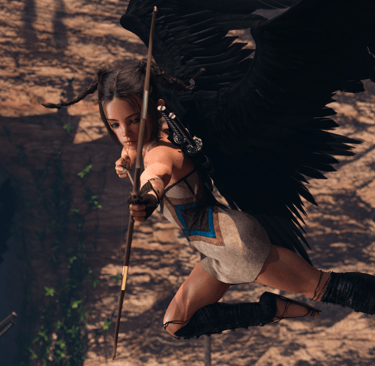
By eleven I was shooting from motion: a leap off the low ledge, a twist through the warm updraft, the arrow gone before my feet remembered gravity. My mentor stopped catching me when I landed; I had learned not to fall.
At twelve the training arena opened.
The arena is not a circle, it is long and narrow with water on either side, there is little room to move and no room for mistakes. You move until your opponent wastes a minute; then you take the day. They paired me with trainees who had arms like ropes and grins that promised mercy they didn’t intend to deliver. I learned to make the floor small, to keep my blade and my breath in the same rhythm, to let my opponent swing at the space I had been a heartbeat before.
Fourteen tasted like iron. They put steel in both my hands and told me to read an attack before it thought itself. A feint is a lie; a pivot is a sentence; a parry is a promise you make to your own rules. I learned to hear the tone of a wrist, to know when a shoulder had already committed to a mistake. Some nights I slept with my palms still warm from practice, heat pooled in them like embers under ash.
Fifteen was the first true measure.
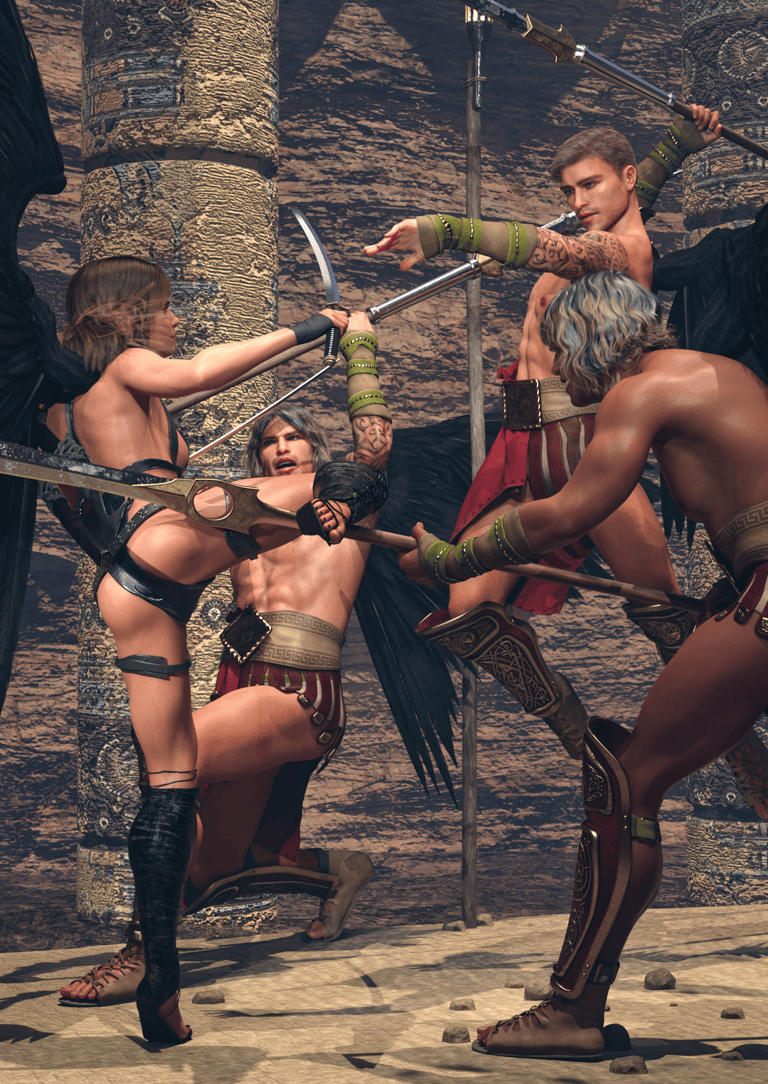
Four warriors entered the training ground to test me — older, heavier, each a wall that believed itself immovable. The horn cut the air. I waited, I listened.
Time slowed down and the world thickened to slow moving frames.
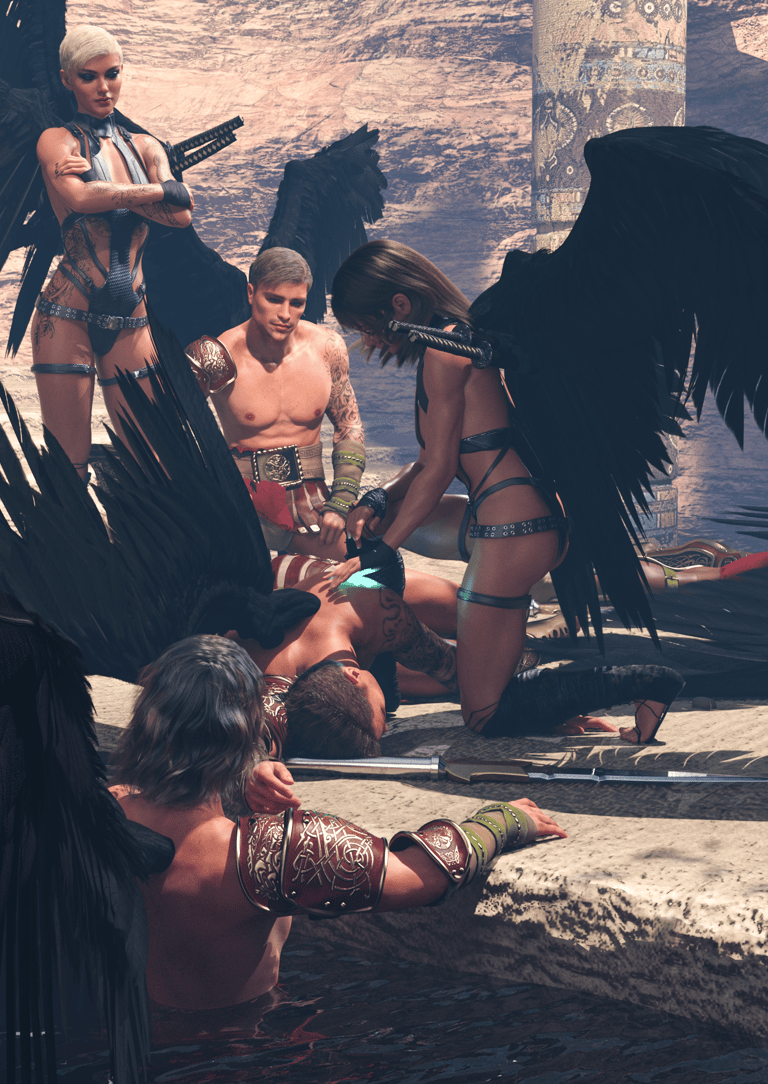
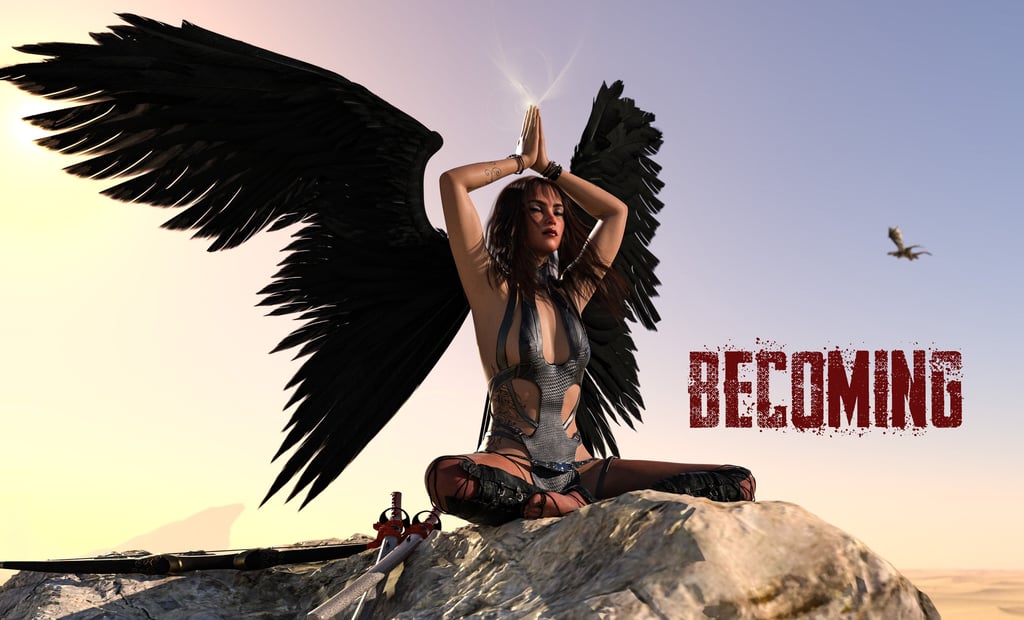
I knelt and called upon the magic and gave back.
Warmth-weaving looks like nothing from a distance — just a girl with her hands on a bruised chest, humming low. Up close you can feel the pattern: breath, pulse, a soft tide that loosens pain and mends bones. One of the men opened his eyes ready for mockery and found only work. “Breathe,” I told him. “You’ll need it later when we go again.” A weapon that does not heal weakens the line it claims to guard.
Sixteen found me quiet, which is not the same as gentle.
By then the blades were no longer tools; they were thoughts that happened faster than language. I could walk into the arena, touch the chip on my favourite pillar, and feel the map of every spar I had ever fought bloom beneath my ribs. My mentor no longer stood at my shoulder. She watched from the steps, arms folded, certain the lesson had taken. I had become what our species needed me to be: not merely swift or precise, but patient — an edge that chooses when to cut as carefully as how.
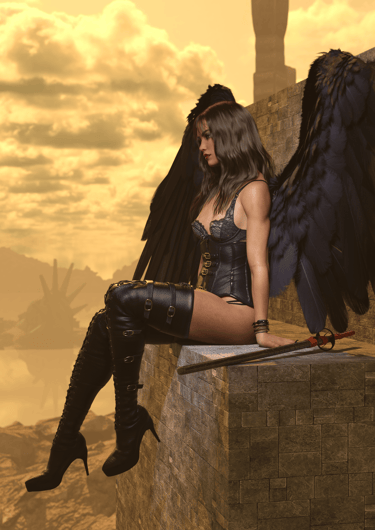
There is a view at the top of the maze where the light turns the stone to honey. I sit there sometimes with my feet over the drop, a sword beside me watching my sisters bathe in the river below, catching the last of the sun. From that ledge you can see our whole life: the road curling along the cliff, the practice yard chalked with footwork, the lagoon and it's metal towers in the distance and the long shadow of a dragon drifting like a question across the golden horizon.
People call me a weapon. That isn’t wrong. But a weapon is only as true as the hand that holds it, and my hand belongs to my people. Every blister I kept, every blow I received, every breath I counted —those were not steps toward glory. They were steps toward reliability. When the horn sounds, they do not need a legend. They need someone who will fly towards the danger, who will not miss and will not leave.
I was ten when the bow first decided I was worth its song. I was fifteen when four warriors learned that speed can be mercy. I am sixteen now, and the edge they forged in me doesn’t shine so much as it endures. Tomorrow I’ll run the ridge before dawn, fly the same breath of air a hundred times, and lay my palms on the sand to give the warmth back to the earth that lent it.
Because the day I stop giving is the day I begin to lose.
I am Princess Aureilia and I was born for this, I am the Dark Angel.
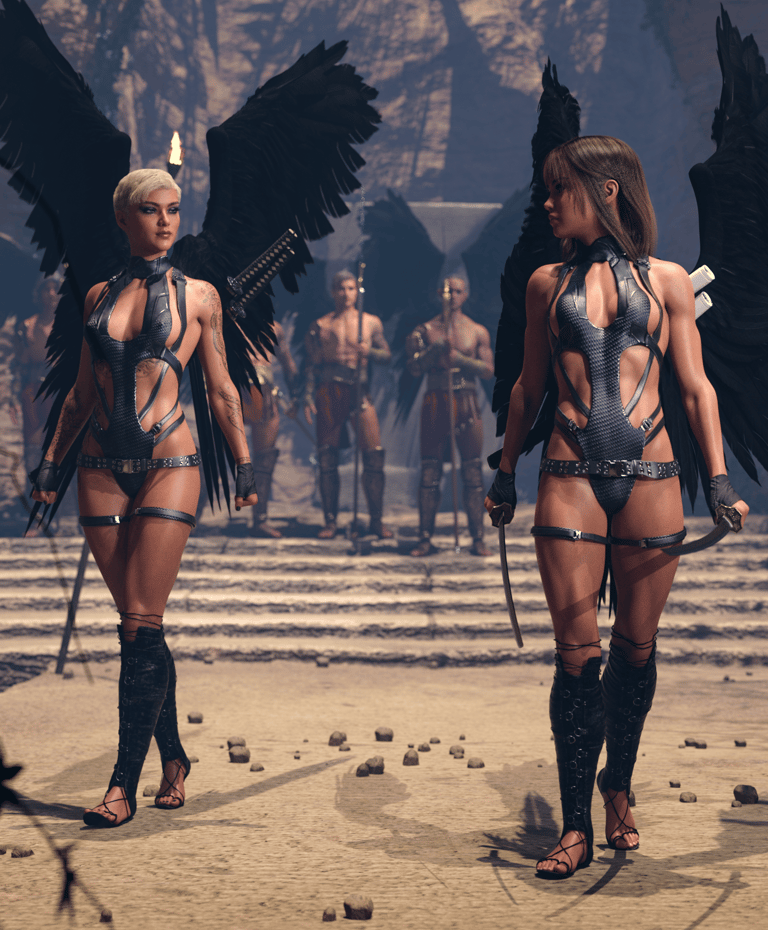
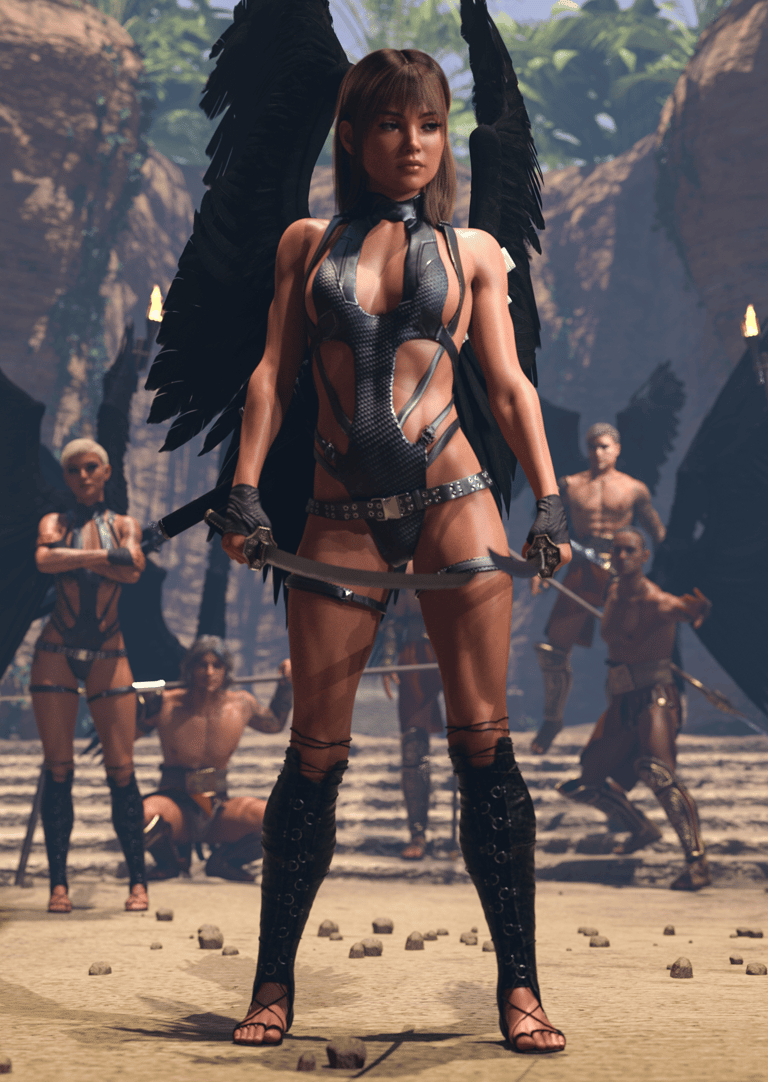
Their first steps arrived like separate pictures that I could step in between. A spear slid toward my hip; I pushed it aside with my leg and drove it to the ground, grinding it to the stone. In the same motion my leg snapped upward — my foot breaking his jaw before he had time to register that he had been disarmed.
I swept my left sword low to high, he was forced to step backward off the stones or be impaled so with the gentlest shove a fall will ever know he dropped back into the water. To my front, a thrust coming down at me; my right blade rode it aside and, as his guard opened, my heel drove into his flank—ribs snapping like dry twigs.
The last man chased the ghost of me from a breath ago. He never quite found the current. I was always half a step left of his certainty. When he finally raised his weapon, my edge arrived at his throat and rested there—not heavy, just enough to let him feel the end of his part in this test.
Time resumed only when the dust remembered to settle. My heart was steady. It had taken 8 seconds, they felt humiliated but the training arena keeps its secrets.